Are you tired of making car loan payments month after month? Paying off your car loan early can save you money on interest and help you become debt-free faster. In this article, we’ll give you five tips for paying off your car loan early in India, including making extra payments, refinancing, and using a lump sum payment.
Category: Budgeting and frugality
A category focused on strategies for saving money and living frugally, including creating and sticking to a budget.
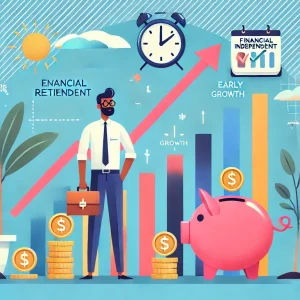
Achieving Financial Independence in India: A Roadmap for FIRE
Achieve early retirement in India with this detailed FIRE roadmap. Learn to save smartly, invest wisely, and create a financially independent future.
Simplify to Prosper: The power of minimalism in building wealth
By embracing a simpler and more frugal lifestyle, you can free up more resources to save and invest, ultimately helping you build wealth over time. Investing and saving more is the key to build wealth through minimalism. It can also lead to a more fulfilling and meaningful life
Don’t Delay: How to Start Saving for Retirement as a Millennial in India
Retirement planning may not be at the top of most millennials’ minds, but it’s never too early to start building your retirement corpus. With longer life expectancy and the possibility of living without active income for longer periods of time, it’s more important than ever for millennials in India to take steps towards a secure financial future.
The ultimate budgeting guide for Indian middle-income families and individuals
Are you a middle-income family or individual in India looking to take control of your finances and achieve your financial goals? Creating a budget is a powerful tool that can help you do just that. In this article, we’ll provide a step-by-step guide on how to create a budget that works for you, including gathering your financial information, tracking your expenses, setting financial goals, making a budget, and monitoring and adjusting your budget. Don’t miss out on the opportunity to improve your financial well-being – read on to learn more!
5 powerful ways to think about money using first principles
Are you looking to make better financial decisions and achieve your financial goals? Thinking about money in first principles can be a powerful way to do so. In this article, we’ll explore 5 ways to think about money using first principles, including understanding your values, understanding your financial situation, making a plan, taking control of your spending, and investing in your future. Don’t miss out on the opportunity to master your finances – read on to learn more!
Planning for Your Future: Investment Strategies for Young Professionals in India
As a young professional in your 20s living in a tier 1 or tier 2 city in India, it is important to consider your long-term financial goals and develop an investment strategy to help you achieve them. This can include starting early to take advantage of compound interest, setting financial goals, diversifying your portfolio, considering tax-saving investments, and seeking professional advice. It is also important to save at least 20% of your income for long-term goals and consider health and life risks by purchasing appropriate insurance coverage. As you plan for your future, be sure to factor in life events such as marriage, home ownership, and children’s education and marriage into your investment strategy.
A Cost-Effective Solution for High Medical Expenses: Super Top-Up Plans in India
In India, medical costs can be a major financial burden for middle class families, particularly in the event of a critical illness. The low penetration of medical insurance in the country means that many families are unable to afford the high costs of medical treatment, which can often lead to financial ruin. One way to protect against high medical expenses is to purchase a super top-up plan, which provides additional coverage on top of an existing medical insurance policy. These plans are typically much cheaper than traditional medical insurance policies, and offer a wider range of coverage. In this article, we will explore the benefits of super top-up plans and how to go about subscribing for one. Don’t miss out on this cost-effective solution for protecting your family against high medical expenses.
The Benefits and Risks of Credit Cards: How to Make Them Work for You
Credit cards can be a valuable financial tool, but they can also be a source of financial strain if not used responsibly. In this article, we will explore the pros and cons of having credit cards, as well as some tips for managing and using them to your advantage. By setting a budget, paying off your balance in full each month, choosing the right card, and using your credit card wisely, you can take advantage of the benefits of credit cards and avoid potential pitfalls. By managing your credit card effectively, you can help achieve your financial goals and improve your overall financial health.
The Importance of Building an Emergency Fund and How to Get Started
Building an emergency fund is an essential part of a healthy financial plan. It provides a cushion to fall back on in the case of an unexpected expense, such as a job loss, medical emergency, or natural disaster. By having an emergency fund, you can avoid going into debt, making rash financial decisions, and maintain control over your finances. Here are a few steps to get you started on building your own emergency fund.